Snack, Drink & Combo Vending Machines
The proven workhorses — modern glass-front machines with tap-to-pay and remote monitoring, placed at your Southern California business free and restocked on what actually sells.
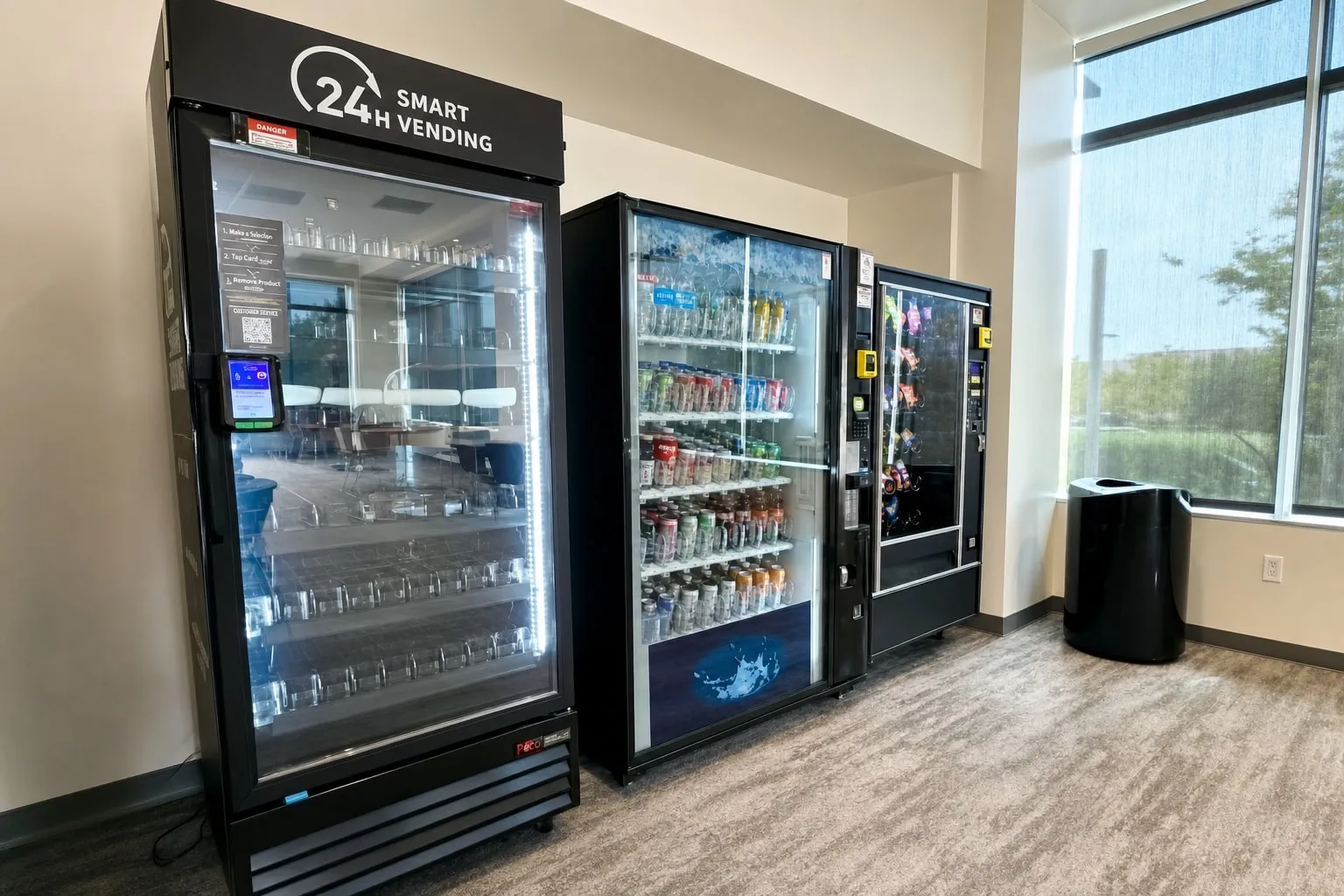
The Lineup
Snack Machines
Glass-front machines stocked with chips, candy, cookies, jerky, protein bars and better-for-you picks your team can browse.
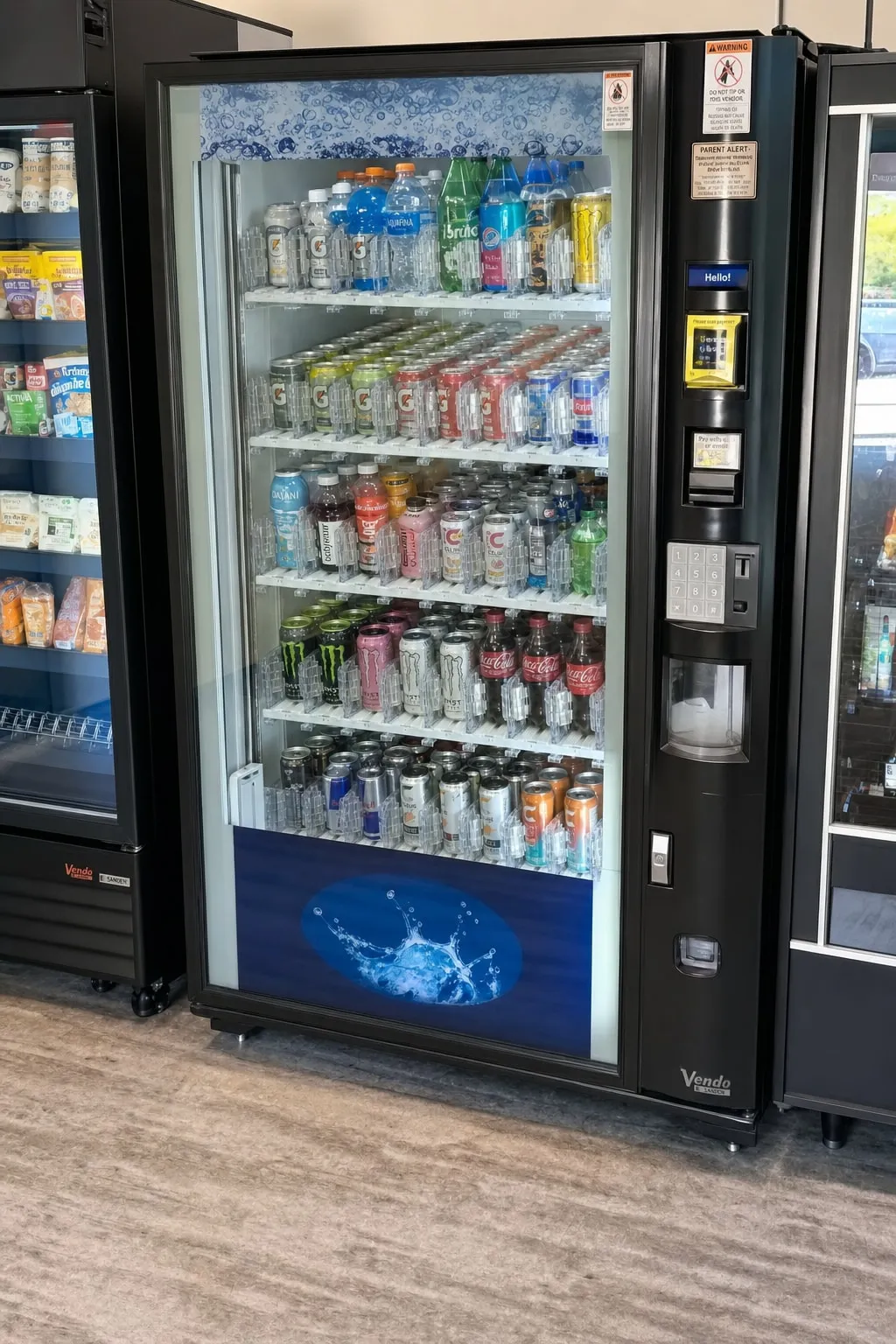
Drink Machines
Sodas, water, sports drinks, energy drinks, juices and iced coffee — always cold, always stocked.
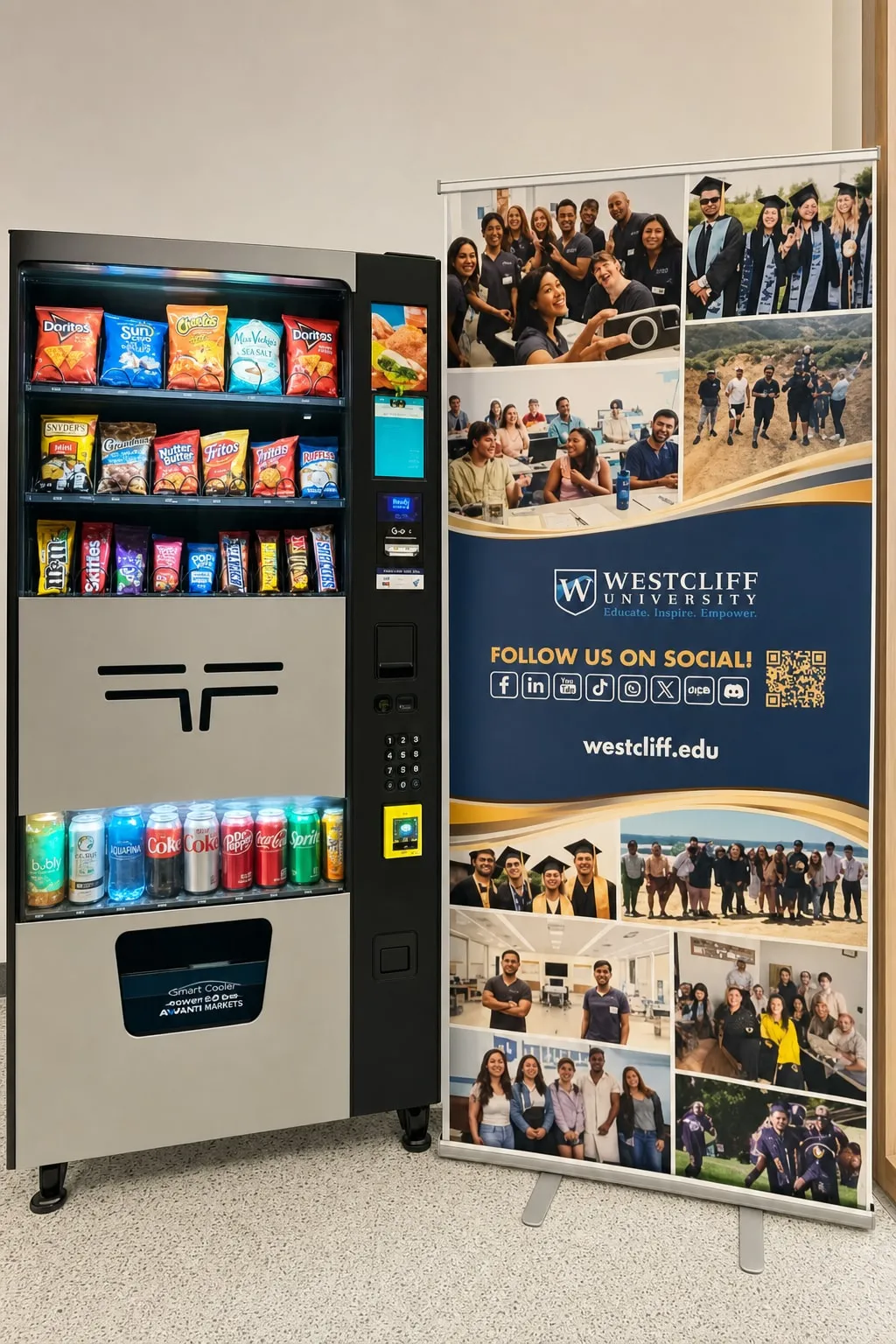
Combo Machines
Snacks and drinks in one footprint with a touchscreen front — ideal for smaller breakrooms, lobbies and campuses.
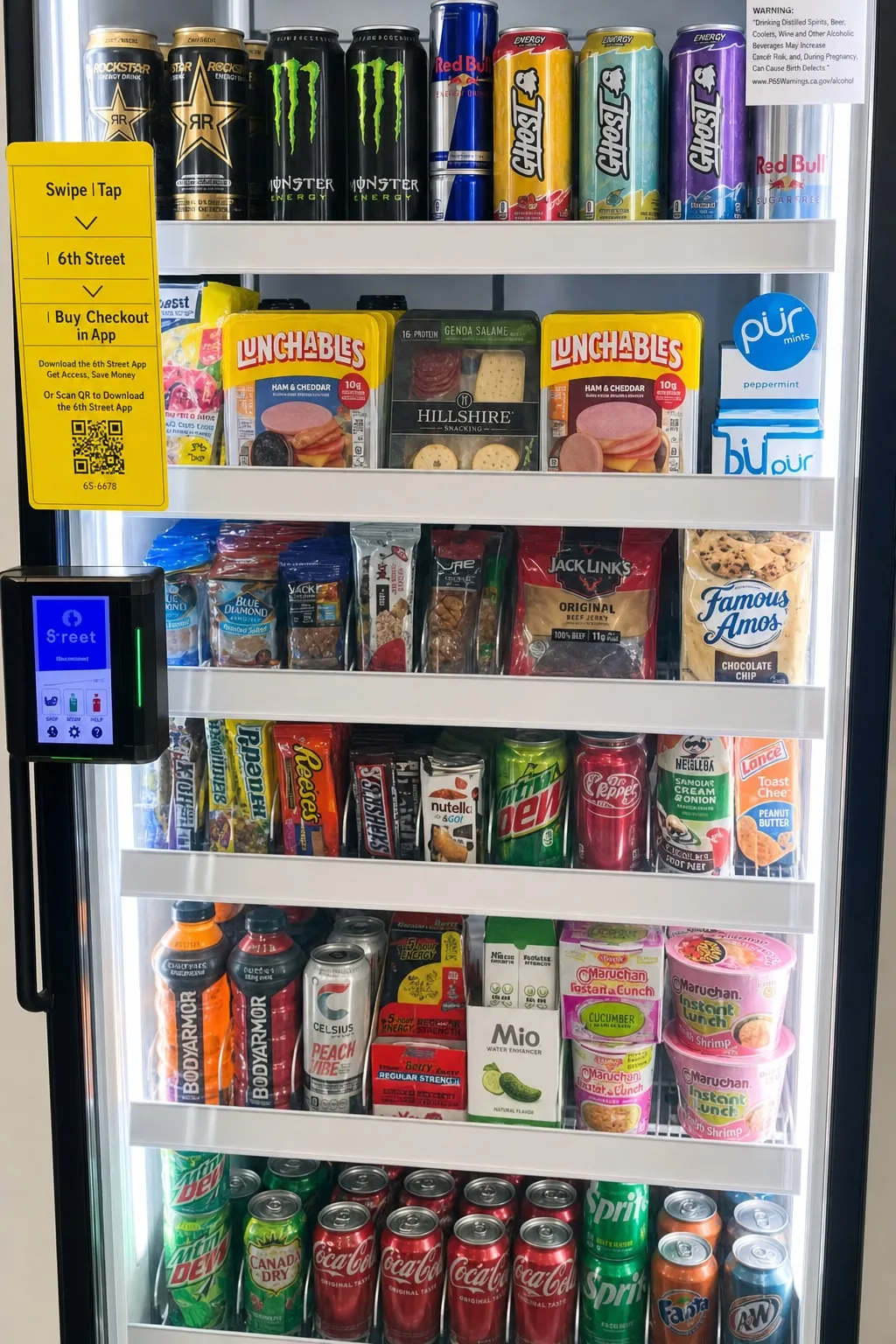
Smart Coolers
The tap-grab-go upgrade: fresh food and full-size drinks with automatic checkout. Our specialty.
Every placement includes cashless payment (tap, Apple Pay, Google Pay) alongside cash, remote monitoring so we restock before shelves empty, and the OSO service promise: same-day technician dispatch in most cases and fast Zelle refunds for failed vends. Want the tap-and-grab upgrade instead? See smart coolers.
All we need from you is the space.
Free equipment. Free installation. Free restocking. No contracts, ever.
What Changed Inside the Modern Vending Machine?
The traditional snack and drink vending machine is still the most cost-effective way to feed a Southern California workplace, and the current generation is a far better machine than the one you remember. It reports its own sales and tells its operator what sold before anyone on site notices a gap. Cashless payments and telemetry have quietly rebuilt the economics of the classic machine.
Payments and data are the two big changes. Modern machines carry readers that accept tap-to-pay cards, Apple Pay, and Google Pay alongside the bill validator and coin mech, and they transmit sales data to the operator over a cellular connection. Under the hood run two standards with unglamorous names: MDB, the multi-drop bus that lets a card reader plug into the machine controller, and DEX, the data format that logs every sale, error, and coin count.
Those acronyms separate operators who guess from operators who know, and OSO runs cashless readers and remote monitoring on every machine we place. Cash has not disappeared either: every machine takes bills and coins alongside the reader, because a second-shift forklift driver with a five in his pocket is exactly the person a breakroom machine exists for.
Snack, Drink, or Combo: Choosing the Right Box
A dedicated snack machine is a glassfront cabinet with spiral coils holding dozens of selections of chips, bars, pastries, and candy. A dedicated drink machine is a refrigerated cabinet that stacks and drops cans and bottles at high volume. A combo vending machine puts snacks and cold drinks together in one refrigerated cabinet. Dedicated machines win on capacity and depth, so larger sites usually run the pair side by side.
The combo wins on footprint and fit: one outlet, one machine-width of wall, the honest choice for offices and smaller crews where two full-size cabinets would sit half empty. The combo machine we installed on the Westcliff University campus in the Irvine area serves exactly that pattern: steady traffic, wide tastes, limited floor space. Modern glassfronts also carry drop sensors, so if a bag hangs on the coil, the machine re-vends or refunds on the spot.
How Does Remote Monitoring Change Restocking?
Remote monitoring replaces the calendar with the actual sales curve. A monitored machine reports what sold, so the route is built around sell-through: bestsellers stay in stock, slow items get swapped out instead of sitting for a quarter, and faults like a jammed motor or a failing compressor surface as error codes the same day rather than as a week of quiet complaints in your breakroom.
That data drives planogram tuning, the map of what goes in which slot. Geography sets the baseline: inland sites in Riverside and San Bernardino counties run hot much of the year, so they get drink-heavy planograms with extra water and sports drinks, because that is what people buy in August in Fontana. Logistics is one of the region's biggest employment sectors, and the distribution centers around Ontario and Moreno Valley run multiple shifts, so restocking follows shift timing there.
At OSO, the person reading that data is the person driving the truck. Brett owns the company and runs the routes himself, from Los Angeles to San Diego, with nothing subcontracted. When your machine flags a dead slot on Monday morning, the decision and the fix belong to the same person, which is most of the reason problems get fixed fast.
When Does a Classic Machine Beat a Smart Cooler?
Whenever the product is sealed, shelf-stable, and priced to move. Chips, candy, canned soda, and bottled water do not need an open-door cooler with automatic checkout; a spiral and a drop tray sell them just as well with less overhead. The smart cooler earns its keep with what a spiral cannot vend: fresh sandwiches, salads, protein shakes, and full-size drinks.
Environment matters too. A vending machine is a locked steel cabinet, the right format for lobbies, loading docks, and lightly supervised spaces; smart coolers and micro markets belong where a badge reader or a camera watches the room. Many sites end up running both, a cooler for fresh food and a snack and drink pair for volume staples. The honest rule is to match the machine to the product, not the other way around.
What Does a Vending Machine Cost Your Business?
Nothing. OSO provides the machine, delivers it, installs it, stocks it, and repairs it at no charge, forever, and makes its money on product sales. Free vending machine placement is not a promotion; it is how the business works. No contracts, no cancellation fees, no minimum employee count. If the machine is not working out, we take it away and part as friends.
We ask for a standard outlet, a level patch of floor, and reasonable access for restocking visits. Elsewhere in the industry, watch for revenue-share promises that quietly push prices up, auto-renewal clauses, and machines placed once and then forgotten. The only catch here is volume: we need enough daily traffic for product sales to cover route time, and we set that bar deliberately low.
How Do You Size a Vending Program for Your Site?
Headcount, hours, and the food options nearby are the three numbers that size a program. A small crew with a cafe next door needs one combo machine. A full office floor with a short lunch window needs a snack and drink pair, probably with a cooler for fresh food. A warehouse running multiple shifts needs capacity, cashless readers, and restocking timed to shift changes.
At roughly seventy-five or more people on site, a micro market starts to beat banks of machines: open shelving and coolers with self-checkout. Orange County office parks lean toward variety and healthy options; campuses do better with combo machines near classrooms and dorms. The tool below turns your headcount and site type into a starting recommendation, and a walkthrough refines it.
What Should Your Location Get?
Answer three questions and get the same recommendation we'd give on a site visit. (The site visit is still free — this just saves you the suspense.)
—
See it →Every option is placed, stocked and serviced free. Start with the 60-second form →
Service After the Install
Service is where vending operators are actually tested, so hold ours to this standard: when a machine goes down, we dispatch a technician the same day in most cases, and within 24 hours at the latest. Every repair is on us, always.
Failed vends get refunded without ceremony. Every machine carries a QR sticker linking to our feedback page; report the loss and we send your refund by Zelle, usually the same day. Nobody should have to petition a call center in another state over a stuck bag of chips.
We cover Los Angeles, Orange, Riverside, San Bernardino, and San Diego counties, with routes that run from LA to San Diego. So Cal based, local proud, as the sticker on every machine says. Call or text (909) 500-3241 with your headcount and address and you will get a straight recommendation, not a pitch deck.
Machine Questions
Do your machines take credit cards, Apple Pay and Google Pay?
Yes — every OSO Vending machine and smart cooler takes tap-to-pay cards, Apple Pay and Google Pay alongside cash. Cashless payment is not optional in vending any more: locations that only take bills see noticeably lower sales, and smart coolers require a card tap to open the door at all.
Get Your Free Machine or Smart Cooler
A real person — the owner, not a call center — will get back to you within one business day. No spam, no pressure, and we never sell your info. Prefer to talk? Call or text (909) 500-3241.